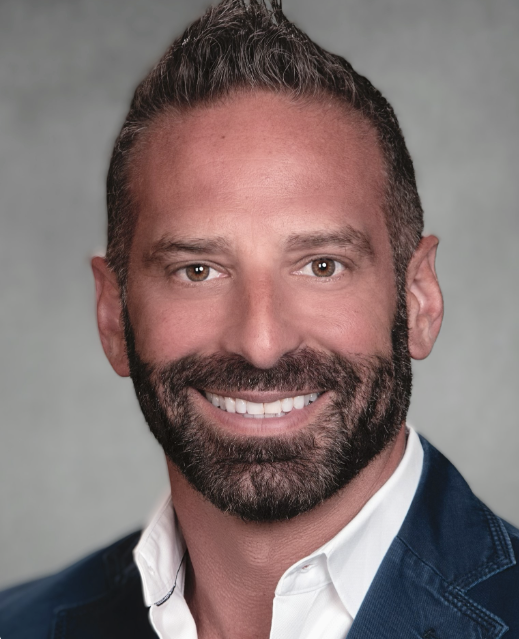
Brick, New Jersey Mar 12, 2026 (Issuewire.com) - In the modern corporate landscape, a recurring paradox exists: high performance in Director through VP roles does not automatically translate into executive promotion. Many mid-career leaders find themselves hitting a professional ceiling because they remain "super-operators" focused on tactical execution rather than enterprise-wide influence. This plateau occurs when organizations emphasize immediate performance while neglecting the underlying leadership architecture required for senior-level advancement.
The Evolution from Execution to Strategy
Transitioning from operational excellence to enterprise-level leadership requires a fundamental shift in how a professional navigates their career. Brian Baldari, a veteran with a 23-year perspective on healthcare systems and executive strategy, posits that leadership transformation must begin with intentional design. Within the ResilExec Coaching framework, this philosophy is described as Strategic Architecture.
Strategic Architecture is a disciplined process for examining the alignment between an executives strategic value and their professional visibility within the enterprise. Rather than treating leadership as a collection of motivational principles, this methodology frames it as a structured system. Through this lens, high-potential leaders bridge the gap between tactical execution and enterprise-wide influence, constructing a leadership identity built on trust rather than just positional authority. Baldari notes that while traditional command structures may produce compliance, they rarely generate the long-term commitment required for organizational resilience.
Professional Certainty: The Foundation of Influence
A cornerstone of this transition is the attainment of Professional Certainty. This concept describes the absolute clarity an executive possesses regarding their purpose, influence, and strategic value within an organization. It is framed not as a soft skill, but as a rigorous system designed to align a leader's intent with their impact.
When leaders operate with this level of clarity, they guide their trajectory with consistency rather than reactive decision-making. This stability forms the foundation of trust. By implementing structured strategy, leaders reinforce both accountability and psychological safety. In this environment, colleagues and stakeholders understand expectations while also recognizing that their perspectives are respecteda combination that encourages higher levels of engagement and long-term commitment.
Structural Wellness and the Visibility Asset
More On Intelligenceninja ::
- New book + journal addresses silence, miscommunication, and emotional healing in relationships
- Alex Lam, Recognized by BestAgents.us as a 2025 Top Agent
- Top Texas Medicare Agent Offers Free HR Workshops
- Unpacking China's Best Smart Switch Wi-Fi Service: Key Features and CE Certification Requirements
- Reflect Your Brand’s Vision with Bright Glassware, a China Top Candle Box Manufacturer
Another defining concept in the transition to the C-suite is Structural Wellness. Brian Baldari describes Structural Wellness as the alignment between authority, responsibility, visibility, and expectation. In many cases, professional friction is rarely a personality conflict; it is a design flaw. It occurs when a leader is given responsibility without the corresponding influence or visibility.
ResilExec addresses this through an intentional audit of how reporting lines and communication patterns either support or sabotage an executive trajectory. Misalignments in these areas gradually erode morale and create instability within organizations. By integrating Structural Wellness assessments into leadership development, Baldari examines how a leaders current positioningand the visibility attached to itimpacts their path toward executive influence.
When leaders understand where misalignment exists, they can recalibrate roles and expectations in ways that restore clarity. This architectural approach transforms leadership from a reactive process into a deliberate system of organizational design. By prioritizing Structural Wellness, executives create environments where both performance and wellbeing can coexist.
Strategic Visibility: Moving Beyond the Work
Strategic Visibility is the asset that separates operators from executives. To reach the highest levels of leadership, a professional must transition from being recognized for their work to being recognized for their enterprise-level insight and strategic value.
Brian Baldari frequently emphasizes that authority alone does not guarantee influence. Sustainable influence is constructed through credibility, clarity, and consistent leadership behavior. Leaders must examine how their actions shape perception across various stakeholder groups. While authority may grant initial decision-making power, long-term influence depends on trust and alignment. Organizations are more likely to support leaders who demonstrate consistency, fairness, and strategic awareness.
By shifting from reactive management to Career Certainty Architecture, leaders are equipped to maintain calculated control even in the face of involuntary anomalies or external disruption. This shift represents one of the most important transformations in modern leadership development.
A Model Designed for the Future
ResilExec Coaching was established to address the recurring challenge of high-performing professionals who achieve operational excellence yet struggle to transition into strategic leadership roles. Through structured frameworks such as the Purpose Driven Ascent curriculum, the Visibility Architecture Map, and the Sponsorship Activation System, the program helps leaders construct a deliberate pathway toward executive influence.
These systems guide professionals in:
- Strengthening strategic visibility.
- Cultivating internal advocacy and sponsorship.
- Aligning their work with enterprise priorities.
As organizations continue to navigate technological disruption and workforce transformation, leadership models must evolve. Brian Baldari believes the next generation of executives will be defined by their ability to cultivate trust while maintaining strategic discipline.
The shift from authority to influence is more than a career move; it is a fundamental evolution in how one leads. When organizations are designed around clarity, alignment, and structural integrity, they create environments where professionals can contribute with confidence and purpose. By integrating these principles with structured systems of influence, the ResilExec model aims to equip professionals with tools capable of sustaining both organizational performance and human wellbeing.
Source :Brian Baldari
This article was originally published by IssueWire. Read the original article here.
1 month ago